

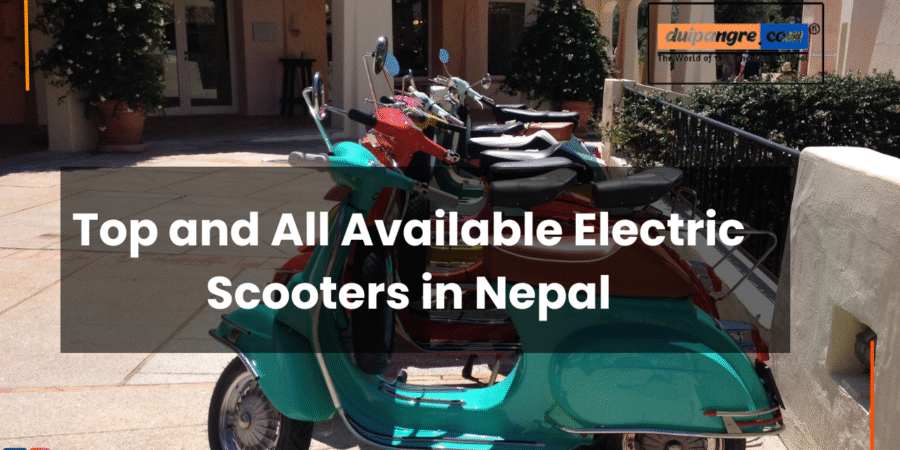
In this blog, we will look after all the Top and All Available Electric Scooters in Nepal. Basically, Electric Scooters are categorized with their Battery and Motor power. Firstly, Electric Scooters are manufactured with two kinds of motors. 1) BLDC (Brushless DC Motors) and 2) BDC (Brushed DC Motors).
BLDC (Brushless DC Motors)
BLDC is a new technology that does not uses brushes instead, the rotating object called rotor becomes the permanent magnet and it needs no current, eliminating the need for brushes and commutator. The Brushless Motors are quieter and more efficient. These Motors are a quality e-Scooter options and offers controllability, a longer operating life, reduces energy consumption and heat generation, and if motors are battery powered it lengthens the battery life.
BDC (Brushed DC Motors)
BDC is an old technology operating since 1800. The brushes deliver current through the commutator into the coils on the rotor. The Brushed Motors create electrical noise and are low efficient. The brushes might get down from friction and can disrupt the voltage making it act to irregular.
The above mentioned are just an information regarding the best motor type for any two-wheelers in e-Scooters. Here, are the list and overview of the e-Scooters available in Nepal with the description of Motor type, Battery Power, Maximum Speed, Manufacturer and the Price tag in Nepalese Market.
- 1. TVS iQube
- 2. Yadea
- 3. Segway Ninebot
- 4. Ather
- 5. Bajaj Chetak
- 6. Super Soco
- 7. Komaki
- 8. Pure EV
- 9. Lvneng
1. TVS iQube
The TVS iQube is produced by TVS Motor Company (India), and in Nepal it is imported and distributed by Jagdamba Motors. It is a premium electric scooter aimed at riders who want connected features, respectable range, and good build quality. It comes with modern features such as TFT displays, connectivity, under‑seat storage, regenerative braking, etc.
Motor Type & Performance
The motor in all iQube variants in Nepal is a BLDC hub‑mounted motor producing ~4.6 kW peak power (≈ about 6 PS) and 140 Nm of peak torque. Some sources list a “rated power” of ~3.0 kW in the base / 2.2 kWh variant.
Acceleration figures cited are 0‑40 km/h in about 4.2 seconds. Top speed depends on variant: ~75 km/h for the lower‑battery (2.2 kWh) version, up to ~78 km/h for the larger battery version.
Battery & Range
There are at least two main battery capacity variants in Nepal:
- A 2.2 kWh battery pack variant. This is the more affordable option. Offers a claimed real‑world range around 75 km per full charge. Charging 0‑80% using the dedicated charger takes ~2 hours.
- A 3.4 kWh battery pack variant, which provides a longer range of approximately 100 km per full charge. The charging time for 0‑80% on this higher‑capacity version is about 4.5 hours using a 650 W charger, with full charging (0‑100%) ~6 hours.
Battery type is lithium‑ion, non‑removable as per local specifications. It also features a Battery Management System (BMS) for protection, and the scooter has an IP67 rating for water & dust resistance.
Specifications & Features
Other important specs and features include:
- Weight: ~110 kg for the 2.2 kWh variant; ~118–119 kg for the 3.4 kWh variant.
- Ground clearance: 157 mm.
- Seat height: ~770 mm.
- Suspension: Front is telescopic fork; rear is hydraulic twin tube shock absorber.
- Brakes: Front disc (220 mm), rear drum (130 mm), also features regenerative braking.
- Wheels / Tyres: 12‑inch wheels front & rear with size 90/90‑12 tyres, tubeless.
- Other features: Under‑seat storage ~30‑32 litres; LED lighting; connectivity features (depending on variant) like turn‑by‑turn navigation, crash/tow alert, etc. The higher‑end “S” variant adds SmartXonnect connectivity, larger TFT display, adjustable suspension in some respects.
Variants & Differences
TVS iQube in Nepal comes mainly in three variants:
- Base / 2.2 kWh variant — smaller battery, slightly lower cost, fewer premium features. Top speed ~75 km/h. Simpler display, fewer connectivity features. Under seat storage ~30 L. Weight lower due to smaller battery.
- 3.4 kWh standard variant — larger battery, greater range (~100 km), somewhat higher weight, more charging time. More premium display and features likely.
- “S” variant (3.4 kWh) — includes premium options: perhaps larger TFT display, enhanced connectivity, different colour options, maybe better finishing or additional comfort / aesthetic features. Price is highest in the lineup.
Price Tag in Nepal
Here are the prices for different variants of the TVS iQube in Nepal:
- The 2.2 kWh base variant is priced at NPR 299,900 (~ Rs 2,99,990).
- The 3.4 kWh standard variant is priced around NPR 399,900.
- The 3.4 kWh “S” premium variant is priced around NPR 429,900.
So the overall price range in Nepal for TVS iQube is roughly NPR 2,99,900 to NPR 4,29,900, depending on variant and included features.
Visit TVS iQube official site
Read Also:- EV to Petrol Power: Two-Wheeler Launches in Nepal 2025
2. Yadea
Yadea (based in China) is a leading manufacturer of electric two-wheelers (scooters, bikes) and claims to be “Global No. 1” in its segment over multiple years. In Nepal, Yadea’s products are officially distributed (or imported) and have gained traction in the electric scooter market, competing with other brands. Their Nepal website lists models and dealers.
Motor Type & Performance
Yadea uses hub motors or proprietary motor systems (often labeled “TTFAR” in Nepal / South Asia). For example, on the G6 model, the motor is branded TTFAR with rated power 2,000 W and maximum (peak) power 3,000 W. The G6’s motor also delivers a torque of 149 N·m. Top speed for G6 is up to 60 km/h.
Other Yadea models in Nepal have different motor specs. For instance, E8S Pro is listed in Nepal price tables with “2.8 kW” (i.e. 2,800 W) as a motor power metric.
Globally, Yadea’s G5 series uses a hub motor (integrated into wheel) for its various versions (G5, G5 Pro, G5S).
Battery & Range
Yadea tends to use advanced lithium / graphene battery technology in many models. For the Nepal G6, it uses a Graphene battery, 72 V, 38 Ah. Charging time is cited around 6–7 hours. The claimed range for G6 is 150 km under ideal conditions.
Other models in Nepal:
- The E8S Pro is often listed with “2.8 kW” motor in price tables; though battery details are not always clearly published in Nepal listings.
- The G5 globally (not necessarily Nepal variant) offers multiple battery / capacity options; e.g. the G5 Pro version doubles the battery capacity compared to base model, enabling higher range.
- Some Nepal import / dealer lists include models like GT60 with a price listing (e.g. NPR 242,440) though full battery / range details in Nepal listings are sparse.
Battery life cycles (for G6) are typically backed with warranty (e.g. 2 years / 20,000 km) and rated for about 800 cycles.
Specifications & Features
Taking the G6 as a detailed example (one of the key models in Nepal):
- Max speed: ~60 km/h
- Torque: 149 N·m
- Tires / wheels: 12-inch aluminum alloy wheels. Front tyre 90/90-12 tubeless; rear tyre 100/80-12 tubeless.
- Brakes: Disc brakes both front and rear.
- Suspension / structure: Hydraulic shock absorption, robust body & frame.
- Storage: Boot / under-seat storage ~ 30 L capacity.
- Ground clearance: ~170 mm.
- Dimensions: ~ 1790 mm (length) × 735 mm (width) × 1220 mm (height).
- Others: Energy recovery / regenerative features when cruising, aerodynamic body design, energy monitoring systems.
Other models like G5 (global spec) include features like removable battery (for charging in house), combined braking system (CBS), 7-inch display, and optional keyless start (depending on variant).
Variants & Differences
Yadea often offers multiple variants or trim levels within a model line, with differences in battery capacity, power output, features (like keyless start, display type, dual battery vs single battery). For example, the G5 series has:
- G5 (base)
- G5 Pro (with higher battery capacity, longer range)
- G5S (with faster motor / higher output, more features)
In Nepal, variant differentiation is less obvious in the published price listings, but some models do have “special editions” (e.g. with rear backrest, bumper & Tailbox) — for instance, the GT60 line is sometimes listed with “GT60 Backrest” or “GT60 Bumper & Tailbox” variant options in dealer/bike-price listings.
Variants differ in motor peak power, battery size, range, and occasional extra accessories. The differences may also involve cosmetic options (colors, decals) and add-on accessories (rear backrest, luggage box).
Price Tag in Nepal
Here are some of the known / advertised Nepal prices for Yadea models (as of the latest listings):
| Model | Approx Price (NPR) |
|---|---|
| G6 | Rs. 2,60,000 |
| E8S Pro | Rs. 2,30,000 |
| G5 | Rs. 3,50,000 |
| C1S | Rs. 3,70,000 |
| GT60 | Rs. 242,440 |
| Other small / “light” models | (e.g. GT30, M6L) |
Visit Yadea official Site
Read Also:- Motorcycle Insurance in Nepal: Clear Guides to Buy, Renewal & Coverage Options
3. NIU
NIU is a global EV scooter & e-motorcycle brand, known for smart scooters with connected features (app, remote diagnostics, etc.). In Nepal, NIU is distributed by Eco Infinity Pvt. Ltd. and has established a lineup ranging from lower-speed mopeds to high-speed GT scooters. The appeal includes stylish design, decent range, app integration, and relatively premium build.
Motor Type & Performance
- The NIU scooters typically use electric hub motors or motors powered by Bosch / NIU’s in-house energy systems. Some GT / premium models have higher wattage and peak output. For instance, the NIU NQi GT uses a 3000 W motor (with higher peak potential) capable of pushing the scooter to ~80 km/h.
- Lower-end models like NIU UQim use much smaller motors (~ 350 W nominal, ~600 W for 30 min in some rating) with top speeds in the ~30-35 km/h range.
So performance spectrum is from ~30-35 km/h (for utility / moped class) up to ~80 km/h (for premium GT class). Acceleration & torque vary accordingly; premium models are more responsive especially in uphill or with two passengers.
Battery & Range
- Battery systems are lithium ion; some models have dual battery setups for extended range.
- For example, NQi GT has dual 60V × 26Ah batteries. Claimed range is ≈ 90-130 km under favorable conditions. Charging time ~3.5 hours for a “full setup” in that model.
- Mid-tier models like MQi+ Sport have smaller batteries (e.g. 48V, ~31Ah) with ranges ~ 55-85 km. Charging times are longer (~5-7 hours).
- Lower speed / moped class (UQim etc.) have much shorter ranges (~ 30 km) because of smaller battery packs.
Specifications & Features
Here are features common or notable among NIU models in Nepal:
- Top Speed: Ranges from ~32-35 km/h for moped class to ~80 km/h for GT class.
- Charging Time: Depends on battery size. Smaller battery + single pack ~5-7 hours; dual battery & higher capacity models ~3.5-4 hours.
- Braking / Brakes: Many NIU scooters offer dual disc brakes or disc/drum combos; Combined Braking System (CBS) is common. Regenerative braking / energy recovery features are included in many models.
- Tyres / Wheels: Depending on model; premium ones tend to have larger tyres (for stability), tubeless tyres, etc.
- Weight, Ground Clearance: Premium models are heavier (due to dual batteries etc.), ground clearance moderate. For example: NQi GT has kerb weight ~114 kg.
- Smart Features: App connectivity, GPS tracking, LED lighting, LED dashboards, sometimes keyless operation, anti-theft alarms, etc.
Variants & Differences
NIU offers multiple variants / trims, mainly distinguished by:
- Battery configuration: Single battery vs dual battery; higher Ah makes for longer range.
- Motor power / peak output: The more premium / GT models have more power → better speed, better load (two riders).
- Design / Accessories: Some variants differ in paint finish (glossy vs matte), colour choices, additional accessories (larger footrests, better suspension, etc.)
- Feature set: More sensors, better display, more riding modes, faster charging, higher quality brakes, etc.
- Class / Use-case: Low-speed moped (UQim), urban scooter (MQi+, UQi GT etc.), premium GT (NQi GT etc.).
Price Tag in Nepal
Here are approximate prices of NIU models in Nepal as per recent listings:
| Model | Approx Price (NPR) | Features / Class |
|---|---|---|
| NIU UQim (moped class) | Rs. 145,000 | Lower speed, short range ~ 30 km, utility use. |
| NIU MQi+ Sport | ~ Rs. 255,000-276,000 | Mid-tier, urban commuter, ~45 km/h, ~ 55-85 km range. |
| NIU UQi GT | ~ Rs. 255,000-276,000 | Stylish urban scooter, similar to MQi+, differing design & features. |
| NIU Gova G3 | ~ Rs. 277,000 | A bit more speed / range in the mid class. |
| NIU N Sport | ~ Rs. 310,000-315,000 | More premium features, better power/range. |
| NIU Gova G5 | ~ Rs. 325,000 (introductory) / some listings ~ Rs. 360,000-364,000 | Higher range & speed; more powerful motor, larger battery. |
| NIU MQi GT | ~ Rs. 435,000 | Dual battery, higher range, larger frame / tyres etc. |
| NIU NQi GT | ~ Rs. 445,000-495,000 | Flagship GT class; top speed ~80 km/h. |
Visit NIU Official Site
Read Also:- The best tips and ideas for motorbike maintenance
3. Segway Ninebot
Segway-Ninebot is a global brand known for electric mobility solutions, including e-scooters, e-bikes, and last-mile transporters. The company combines Segway’s legacy with Ninebot’s R&D to produce smart, connected electric two-wheelers. In Nepal, Segway-Ninebot models are imported and distributed (mostly by I Hub Pvt. Ltd.), and come with features like app control, smart alarms, keyless / remote locking, etc. The market for Segway-Ninebot in Nepal spans mid-to high-end e-scooters aiming at commuters who want higher range, better performance, and premium features.
Motor Type & Performance
Segway-Ninebot scooters in Nepal use brushless hub motors (often with Bosch or Segway’s own motor units) with varying rated and peak outputs depending on model. Some key values:
- The E125 uses a 2,400 W motor (rated), with a peak (burst) power up to ~ 3,600 W.
- The N100 uses a “Segway customized brushless motor” rated at about 1,500 W, with peak power ~ 2,200 W.
- The E110L is also in the ~2,400 W range.
Top speeds also vary:
- N100 has a top speed ~ 60 km/h.
- E125 claims higher (~75 km/h in some sources) or ~ 58 km/h in others depending on conditions.
Torque values are relatively high: e.g. E125 ~ 200 Nm torque.
Battery & Range
Battery capacity, voltage, and range differ by model:
| Model | Battery / Voltage / Ah / Wh* | Claimed Range |
|---|---|---|
| N100 | 72 V / 24 Ah (~ 1,728 Wh) lithium battery; IP ratings: vehicle IPX5, battery IPX7. | ~ 72-105 km under favorable conditions. |
| E100 | ~ 72 V / 20 Ah Li battery, removable | ~ 60-100 km claimed. |
| E110L | 72 V / 24 Ah battery; dual battery configuration is suggested in some sources. | Range ~ 60-110 km in typical usage. |
| E125 | 74 V / 27 Ah (≈ 2,000 Wh) battery. Some variant options include ability to add a second battery for extended range. | Claimed range ~ 60-120 km depending on configuration. |
Wh = Volt × Ampere-hours; actual usable capacity may be lower depending on battery management, weather, riding mode, loads etc.
Charging times vary:
- N100 ~ 8-9 hours for full charge.
- E125 ~ 5-6 hours.
Specifications & Features
Here are some of the common / standout features & specs among Segway-Ninebot scooters in Nepal:
- Build & Dimensions:
N100: ~ 1890 mm length × 675 mm width × 1090 mm height; ground clearance ~ 129 mm.
E125: ~ 1745 × 675 × 1200 mm; weight ~88 kg. - Tyres & Wheels: Tubeless, anti-skid tyres; sizes differ (front / rear). E.g. E125 uses 12-inch tyres.
- Braking & Safety: Dual disc brakes or disc/disc + E-ABS in many models; some have Bosch dual-channel ABS (E125) in certain reports. IPX water/dust resistance levels (vehicle / battery) like IPX5/IPX7. Remote lock, anti-theft, alarm possibly via app.
- Connectivity & Extras: Digital displays; cruise control; keyless/start via remote or app; under-seat storage (~22-27 litres in many models); dual USB ports; LED lighting; alarm / locking features. E110L especially mentions features like automatic parking mode, seat lock, tail box etc.
- Load Capacity / Seating: Most are two-seater; load capacity ranging (sometimes ~150 kg) depending on model.
Variants & Differences
Segway-Ninebot in Nepal offers several models; differences come in motor power, battery size, feature set, and range. Here are key variant differentiators:
- Model series: N-series (e.g. N100) vs E-series (E100, E110L, E125). The E-series tends to have higher speed, more premium features, sometimes dual battery option, more powerful motor, more accessories.
- Battery / Dual battery options: E125 for example is reported to allow adding a second battery for higher range in some adverts.
- Safety & Braking differences: Some models have upgraded ABS systems, higher IP protection, etc.
- Feature / accessories differences: Tail boxes, extra locks, app features, storage capacity, colour options, displays etc.
Price Tag in Nepal
Here are the latest known prices for Segway-Ninebot models in Nepal:
| Model | Approx Price (NPR) |
|---|---|
| Segway-Ninebot N100 | Rs. 2,60,000 |
| Segway-Ninebot E100 | Rs. 2,91,000 |
| Segway-Ninebot E110L | Rs. 3,65,000 |
| Segway-Ninebot E125 | Rs. 3,90,000 |
Visit Segway official Facebook and Instagram Page
Read Also:- Secure Payment and safe transaction in online platform
4. Ather
Ather Energy is an Indian electric two-wheeler manufacturer founded in 2013 by Tarun Mehta and Swapnil Jain. It makes smart, connected electric scooters that integrate hardware, software, and charging infrastructure. Ather has presence in Nepal (via distributor) and has launched models like Ather 450S, Ather 450X, and more recently Ather Rizta in the Nepali market.
Motor Type & Performance
The motor and performance vary by model / variant. Below are typical characteristics:
Ather Rizta is designed for “family” use moderate but efficient performance suited for everyday commuting
The scooters generally use brushless DC (BLDC) motors (or PMSM in some variants) common for electric scooters.
Ather 450 series (450X / 450S) use motors delivering a good balance of torque and top speed.
For instance, older Ather 450 had a motor output ~5.4 kW (peak) and torque ~20.5 Nm.
In newer 450X variants, performance is improved.
Typical performance figures (for popular models):
| Model / Variant | Top Speed |
|---|---|
| Ather 450X (higher variant) | ~90 km/h |
| Ather 450S | Lower top speed relative to 450X |
| Ather Rizta | ~80 km/h (for family use) |
Battery & Range
Battery capacity, efficiency, and claimed range are key differentiators across variants.
- Battery Types: Lithium-ion (Li-ion) packs.
- Variants in capacity:
• Ather 450X / 450S: have variants with ~2.9 kWh and ~3.7 kWh packs.
• Rizta: launched with 2.9 kWh and ~3.5–3.7 kWh variants (or similar) in Indian market. - Claimed / Certified Range (IDC / standard test cycles):
• For 450X, the higher battery variant (3.7 kWh) claims ~161 km (IDC) in some sources.
• Lower battery variant (~2.9 kWh) claims lower range.
• For Rizta, in Indian spec, one variant claims ~160 km (for the higher battery) and a lower variant ~123 km. - Charging times:
• For Ather 450X, the 2.9 kWh version charges 0–80 % in ~6h 36min (per some Nepal price listings)
• Ather’s official Nepal site mentions fast charging network and home charging options. - Real/“True” Range: In real-world/“true” range (especially in hilly terrain, load, traffic), the actual achievable distance is lower than test numbers. For example, a 2.9 kWh variant with company certified ~111 km may get ~90 km true range in practice.
Specifications & Features
Below is a generalized list of specifications and features for Ather scooters, especially 450 series & Rizta:
Typical Specifications
| Item | Value / Range |
|---|---|
| Weight (wet / kerb) | ~110–120 kg (varies by variant) |
| Tires & Wheels | 12-inch alloy wheels, tubeless tires |
| Brakes | Front disc brake (often 200 mm) + rear disc or drum (depending on model) |
| Suspension | Front: Telescopic forks; Rear: Mono-shock or progressive monoshock |
| Frame | Aluminum / alloy frame designed for lightness & rigidity |
| Charging Interface | Portable charger (home), support for public / fast charging network |
| Display & Connectivity | 7-inch TFT color touchscreen, navigation / maps, Bluetooth & WiFi / cellular (4G) connectivity, over-the-air (OTA) updates |
Smart Features
- Turn by Turn Navigation
- Guide-me-home light
- Theft and Tow alerts
- Reverse mode (for tight parking) in some models (e.g. Rizta)
- Auto hold (on slopes) in some model
- OTA updates for software improvements
- LED lighting, side-stand sensor, etc.
Variants & Differences
Ather offers multiple variants (differing in battery, features, etc.). In Nepal, key variants are:
- 450S
- Positioned as a more affordable model.
- Range is lower (because of smaller battery).
- Some features are toned down compared to 450X.
- 450X
- More premium / performance variant.
- Two battery options: ~2.9 kWh (lower range) and ~3.7 kWh (higher range.
- Better performance, smart features, and higher top speeds.
- More features (connectivity, OTA, etc.).
- Rizta
Price Tag in Nepal
As of mid-2025, here are approximate Nepali prices and price notes:
Ather 450S: Approximately Rs. 3,24,999 (after recent price cut)
Ather 450X:
• Lower battery / “LR” variant: ~ Rs. 3,85,000 or slightly lower depending on offers
• Higher battery / “HR” / premium variant: ~ Rs. 4,20,000
• Some sources mention the 2025 price starts at ~ Rs. 3.65 lakh for 450X
Visit Ather official Site
Read Also:- The Best VR Bikes their Price and Specifications in Nepal
5. Bajaj Chetak
The Bajaj Chetak is a legacy scooter brand that was revived by Bajaj in its electric scooter line (“Urbanite” EV brand). The model “Chetak 35-series” includes variants like 3501, 3502, 3503 etc. The Chetak 3501 is the top-spec launched in Nepal as of August 2025. Nepal is the first international market outside India to get that new 3501 variant.
Motor Type & Performance
- Motor type: BLDC electric motor (hub or near-hub configuration). The new Chetak 3501 uses a 4 kW (peak) motor.
- Torque: ~ 20 Nm.
- Top Speed: ~ 73 km/h in the 3501 variant.
Battery & Range
- Battery capacity: ~ 3.5 kWh lithium-ion, with IP67-rated protection in some info.
- Claimed range: ~ 153 km (IDC / ARIA or equivalent claim under ideal conditions) for the 3501 variant.
- Charging time:
• From 0 to ~80% takes about 3 hours with the standard charger.
• Full charge (0-100%) around 4 hours 25 minutes in some reports. - Real-world range will be lower than claims depending on road conditions, load, driving style etc.; some reports suggest ~125 km per charge in “normal” use.
Specifications & Features
Here are some of the main technical specs and features for the Chetak 3501 in Nepal.
| Specification | Detail |
|---|---|
| Weight (Kerb) | ~129 kg |
| Tyres & Wheels | 12-inch alloy wheels; tyres tubeless front & rear (size ~90/90-12 front, same class rear) |
| Suspension | Front: Single-sided leading link; Rear: Mono shock (offset) |
| Brakes | Disc at front; rear drum or disc depending on variant; includes CBS / combined braking & regenerative braking features in newer models. |
| Body & Build | Full-metal body, IP67 rating for dust & water resistance in battery/body parts. |
| Storage | Large under-seat storage (~35 litres) in Chetak 3501. Also has “frunk” or floorboard storage in some variants. |
| Display & Connectivity | ~5 to 5.5-inch TFT / digital touchscreen / smart display; smartphone connectivity, Bluetooth, music control; call/SMS alerts; remote immobilization in some listings; navigation/map features; hill-hold, reverse mode, etc. |
| Ground Clearance | ~160 mm. |
| Seat Height | ~760 mm. |
Variants & Differences
- The 35-series includes at least three variants: 3501 (top spec), 3502, 3503. In Nepal, only the 3501 has been officially launched/available so far.
- Lower-variants will likely have fewer features / perhaps lower battery packs or lower performance / fewer conveniences. Some reports say that 3502 / 3503 may come to Nepal in future.
- Differences between variants typically include: riding modes (Eco vs Sport), display type, perhaps charger type, features like reverse mode, connectivity / app features, possibly battery warranty, color options.
Price Tag in Nepal
- The Bajaj Chetak 3501 is priced at NPR 3,24,900 in Nepal.
Visit Bajaj Chetak Official Site
Read Also:- Royal Enfield Nepal’s Price, Models & Specification
6. Super Soco
Super Soco is an electric-vehicle brand (originally from China, partnered with Vmoto etc.), making stylish EV bikes/scooters aimed at urban and semi-urban users. n Nepal they are offered via “Super Soco Nepal” / authorized distributors. The range includes smaller scooters/scooter-style EVs like CU Mini, CUx, CPx, and bikes like TS, TC, TS Street Hunter, etc.
Motor Type & Performance
Depending on model, motor power, torque, and top speed vary quite a lot. Some examples:
| Model | Rated / Peak Motor Power | Torque | Top Speed |
|---|---|---|---|
| Super Soco CU Mini | ~ 900 W nominal, ~1000 W peak | ~ 11.8 Nm | ~ 45 km/h |
| CUx | ~ 1300W nominal, up to ~ 2800W peak | ~ 115 Nm | ~ 75 km/h |
| CPx | ~ 4000W EEC motor, peak power around similar region | ~ 171 Nm | ~ 95 km/h |
| TC | ~ 1900 W (rated), up to ~ 3000 W peak in some variants | ~ 150 Nm | ~ 80 km/h |
| TS Street Hunter | ~ 2500 W rated, ~ 3500 W peak | ~ 180 Nm | ~ 75 km/h top speed indicated (some sources say up to ~85 km/h) |
Battery & Range
Again, varies by variant; single-battery vs dual-battery is a key differentiator.
| Model | Battery / Capacity | Range (single battery) | Range (dual battery / optional) | Charging Time |
|---|---|---|---|---|
| CU Mini | ~ 48V 20Ah lithium-ion (removable) | ~ 60 km | — | ~ 6-7 hours full charge |
| CUx | ~ 60V30Ah battery | ~ 85 km (single battery) | Dual battery may extend range (but mostly single battery spec is cited) | ~ 3.5 hours with fast charging |
| CPx | 60V45Ah, with option for double battery pack | ~ 100 km single battery | ~ 200 km with dual battery | ~ 3.5 hours (fast charger) |
| TC | 60V30Ah, supports dual battery variant | ~ 80 km single battery | ~ 160 km with dual battery | ~ 3.5 hours for fast charge |
| TS Street Hunter | ~ 60V32Ah (single), option for dual battery | ~ 100 km | ~ 200 km with dual battery | ~ 3-3.5 hours charging per battery |
Specifications & Features
Here are common specs and standout features appearing across models:
- General build & weight: Heavier than ultra-light scooters especially in dual battery / higher power models. Example: TS Street Hunter weight ~ 89 kg for single battery version.
- Tyres / Wheels: Tubeless tyres; wheel sizes vary by model (for example, TS Street Hunter has 17-inch wheels front and rear in many specs.
- Brakes: Disc brakes front & rear, often with Combined Braking System (CBS) in many models.
- Lighting / Display / Electronics: LED lighting, full LED headlamps / DRLs; digital/LCD display; some models have keyless go / remote key; anti-theft alarm in scooters like CPx.
- Suspension / Comfort: Varies; higher models get better suspension; ground clearance tends to be decent (for example TS Street Hunter GC ~184 mm)
- Warranty: Typically 3 years for battery, 2 years for motor in Nepal across many Super Soco models.
Variants & Differences
- Many models have “single battery vs dual battery” options. Dual battery gives longer range, higher cost, more battery weight.
- Some models differ in styling (scrambler, streetfighter look, retro, etc.), wheel sizes, braking / suspension hardware, display instrumentation.
- The “Street Hunter” line is more aggressive, sporty in styling, performance tuned vs more commuter / retro‐style models like TC or TSX.
- The smaller scooters (CU Mini, CUx) are more for light, intra-city commuting; the CPx / TS / TC etc are for bigger ranges, higher speed, heavier loads.
Price Tag in Nepal
Here are typical prices (approx) for various Super Soco models in Nepal (2025 data):
| Model / Variant | Approx Price (Nepal) |
|---|---|
| CU Mini | ~ NPR 1,89,900 |
| CUx | ~ NPR 2,69,900 – 2,79,900 |
| TC | ~ NPR 2,95,900 (single battery) / NPR 3,89,900 (dual battery) |
| TS Street Hunter | ~ NPR 3,79,900 (single battery) / NPR 4,79,900 (dual battery) |
| CPx | ~ NPR 4,79,900 (single battery) / NPR 5,99,900 (double battery) |
| TC Max | ~ NPR 4,89,900 |
Visit Super Soco Official Site
Read Also:- The best Top 10 Bikes in World
7. Komaki
Komaki is an electric vehicle brand in Nepal (imported by Unity Trading) that offers a wide range of scooters and electric bikes. They target both commuters and higher end users looking for higher speed / longer range. Their lineup includes: Komaki SE, Komaki Venice, Komaki Ranger (cruiser), Komaki XGT X5 (tri-wheel), Komaki SE Sport / SE Pro, Komaki LY Pro / Premium etc.
Motor Type & Performance
Here are the motor / power figures for some key models:
| Model | Rated / Nominal Motor Power | Peak Motor Power (if given) | Top Speed |
|---|---|---|---|
| Komaki SE | ~ 3000 W (BLDC) | ~ 5200 W peak | ~ 70-80 km/h |
| Komaki Venice | Same ~3000 W nominal | ~ 5200 W peak | ~ 80 km/h |
| Komaki Ranger | ~ 4000 W BLDC motor | (peak power listed same ~4000 W) | ~ 100 km/h |
| Komaki XGT X5 (Tri-wheel) | ~ 1200 W rated, ~ 1800 W peak | 1800 W peak | ~ 45 km/h |
Battery & Range
| Model | Battery Type & Capacity | Claimed Range / Real-world Estimate | Charge Time / Other Battery Details |
|---|---|---|---|
| Komaki SE | ~ 72 V / 40 Ah, Lithium-Ion (or Li-ion / LiFePO4 in some variants) | ~ 120-140 km per charge | ~ 4-5 hours charging time |
| Komaki Venice | ~ 72 V / 40 Ah, Lithium-Ion removable battery; premium / retro styling in Venice versions. | ~ 120 km range for the higher-spec Venice models. Some “Eco” Venice variants lower (~75-100 km) depending on battery / power. | Similar ~4-5 hours charging for full. |
| Komaki Ranger | ~ 72 V / 50 Ah Advanced Lithium-Ion battery (non-removable in some specs) | Claimed range ~ 200 km per charge. | Charging time ~ 5-6 hours. |
| Komaki XGT X5 | LiFePO4 battery, 60 V / 35 Ah pack | ~ 100 km range per charge. | 4-5 hours charging time. |
Specifications & Features
Some shared and model-specific specs and features among Komaki’s lineup:
- Build & Design: Alloy wheels, tubeless tyres in many models (Venice, SE) for better ride & safety.
- Brakes & Suspension: Disc brakes front & rear commonly; CBS / combined braking featured in some models. Good ground clearance (often ~170 mm in SE / Venice).
- Display & Connectivity: Digital speedometer / LED display; Bluetooth in many; some models have reverse assist, cruise control; in Venice / SE variants, features like LED lighting (headlamp, DRLs), USB charging ports etc.
- Warranty: Typically battery warranty ~2-3 years, motor / controller etc vary (often 1 year) in Nepal.
Variants & Key Differences
Komaki offers differentiated variants mainly by:
- Power / Motor Rating — e.g. SE vs Ranger: Ranger is more powerful, higher top speed.
- Battery size & battery type — for example SE / Venice high-end vs Eco variants with smaller battery or less peak power.
- Features — luxury vs utility: cruiser style (Ranger) adds comfort & styling; tri-wheel (XGT X5) for different user group; Eco models trade some performance for cost / efficiency.
- Design / Aesthetics — retro style Venice, sporty SE, cruiser Ranger etc.
- Price tiers aligned with these differences.
Price Tag in Nepal
Here are approximate current prices (as per recent listings) for some Komaki models in Nepal:
| Model | Price (Nepal) Approx |
|---|---|
| Komaki SE | ~ NPR 295,000 |
| Komaki Venice | ~ NPR 310,000 |
| Komaki Ranger | ~ NPR 435,000 (for the standard “Ranger” model) |
| Komaki XGT X5 (Tri-wheel) | NPR 259,000 |
| Komaki Venice Eco | ~ NPR 259,000 |
Visit Komaki Official Site
Read Also:- Marc Marquez is the best and Youngest-ever MotoGP champion
8. Pure EV
Pure EV is an Indian electric two-wheeler manufacturer (based in Hyderabad) known for making electric scooters and entering more powerful electric motorcycles. In Nepal, Pure EV products are distributed by White Lotus Group. They’ve launched several models: ePluto 7G, Etrance Neo, and more recently the Etryst 350 bike.
Motor Type & Performance
Here are motor / performance specs for key models:
| Model | Motor Type | Rated / Continuously Available Power | Peak Power / Torque | Top Speed / Performance Notes |
|---|---|---|---|---|
| ePluto 7G | BLDC hub motor | ~ 1.5 kW nominal | ~ 2.2 kW peak torque ~ 30 Nm | Top speed ~ 60 km/h; 0-40 km/h in ~ 5 seconds for some models. |
| Etrance Neo | BLDC hub motor | ~ 1.5 kW continuous | ~ 2.2 kW peak | Top speed similarly ~ 60 km/h |
| Etryst 350 (electric motorcycle) | BLDC hub motor | ~ 3.0 kW nominal | ~ 4.0 kW peak | Top speed ~ 85 km/h various ride modes (Drive / Crossover / Thrill) ‒ gives different speed thresholds. |
Battery & Range
| Model | Battery Capacity & Type | Claimed / Certified Range | Charging Time |
|---|---|---|---|
| ePluto 7G | ~ 2.5 kWh, Lithium-Ion (portable battery) | Claim: 90-120 km per charge under ideal conditions | ~ 4-6 hours full charge |
| Etrance Neo | ~ 2.5 kWh, Lithium-Ion, portable | also ~ 90-120 km claimed range | ~ 4-6 hours charge |
| Etryst 350 | 3.5 kWh, Lithium-Ion, NMC chemistry | Range claimed ~ 130-140 km | Charging time around 6 hours |
Specifications & Features
Below are shared & model-specific features/specs:
| Feature | ePluto 7G / Etrance Neo | Etryst 350 |
|---|---|---|
| Body & Styling | Retro / scooter styling in ePluto; more modern commuter in Etrance Neo. Alloy wheels; tubeless tyres; disc front / drum rear braking. Regenerative braking. LED lighting. LCD display. Portable battery. | More bike-style: larger tyres, dual hydraulic suspension (front & rear), tubeless tyres, dual disc brakes, more ground clearance (≈ 180 mm) |
| Kerb / Curb Weight | ~ 79 kg (for ePluto) | ~ 120 kg |
| Ground Clearance | Scooters have lower GC (not always stated, but typical scooter style). | Etryst has ~ 180 mm clearance. |
| Ride Modes | Less advanced in scooters — mostly one mode or maybe eco vs normal in some models. | Etryst 350 has 3 ride modes: Drive, Cross Over, Thrill. |
| Display & Connectivity | LCD display (4-inch), LED lighting, regenerative braking, anti-theft smart lock in many versions. | 7-inch LED digital display; LED headlamp with DRLs; sharper styling; better brakes, etc. |
Variants & Differences
- The difference between ePluto 7G and Etrance Neo is mostly styling, perhaps feature finish, price, but performance & battery specs are very close.
- Etryst 350 is a step up: more power, larger battery, more speed, more bike-like design and features. It is the one key electric motor-bike (rather than scooter) in their Nepal lineup.
Price Tag in Nepal
Here are current / recent as-found prices in Nepal (which can vary by showroom, offers, etc.):
| Model | Approx Price (Nepal) |
|---|---|
| Pure EV Etrance Neo | ~ Rs. 260,000 |
| Pure EV ePluto 7G | ~ Rs. 275,000 |
| Pure EV Etryst 350 | ~ Rs. 399,000 |
Visit Pure EV Official Facebook and Instagram Page
Read Also:- Know yours Helmet Safety Certification from ISI to ECE for Better Precaution
9. Lvneng
Lvneng is a brand offering electric scooters in Nepal, often using Bosch motors and Samsung lithium batteries. They target urban commuters and also have models suited for higher performance. Distributed in Nepal by “Lvneng Nepal”, showrooms include Kathmandu etc. Their lineup has a variety of models: some lower powered / simpler ones, and more premium ones (“Max”, “NCE”, etc.)
Motor Type & Performance
- Most Lvneng scooters use Bosch motors in the range of ~1.50 kW up to ~4.00 kW depending on model.
- Top speed is often limited to ≈ 45 km/h for many of the standard models.
- For high-end version like LX06 Max, speed jumps up (≈ 75-85 km/h) thanks to more powerful motor setup.
Battery & Range
- Battery type: Samsung / Li-ion (portable) batteries. Some models allow dual battery configuration.
- Voltages vary: typical batteries are 60V (with 23.4Ah, 26Ah) in many models. Higher models use 72V battery packs.
- Range:
• Many models (standard ones) claim ≈ 75 km per charge.
• With dual battery or upgraded capacity, they claim up to ≈ 150 km in favorable conditions. - Charging time: generally 4-6 hours for full charge on standard battery packs. Some of the larger packs or “Max” models may take less or more depending on charger specs.
Specifications & Features
Here are the common specs/features and what differentiates more premium models:
| Feature | Common / Base Models | Premium / “Max / NCE” Models |
|---|---|---|
| Motor Power | ~1.44-2.05 kW Bosch motors | ~3.9-4.0 kW in Max / NCE options |
| Battery Configuration | Single battery 60V 23-26Ah; portable lithium battery | Dual battery, higher Ah, 72V battery in some models (e.g. NCE) |
| Tyres / Wheels | Tubeless tyres; disc brakes front & rear; wheel sizes ~ 90/90-12 etc. | Larger tyres, sometimes bigger wheels in Max/NCE; possibly improved braking / suspensions. |
| Braking & Safety | Disc brakes, regenerative braking, combined braking (CBS) in many models; IP65 waterproofing listed in specs for some. | Same as above plus possibly enhanced features (e.g. stronger frame, better suspension) in premium models. |
| Other Features | LCD display, 3 riding modes; remote key / anti-theft; USB ports; dual battery support in some variants; ground clearance ~150-165 mm in many. | Premium ones may offer better display, higher performance, sometimes homologation under higher standards (EEC, Euro norms depending) |
Variants & Differences
- LX04, LX01, LX02, LX05, LX08, LX06 are different model lines with varying motor power, battery capacity, styling etc.
- The suffix “-D” as in LX05-D denotes a variant with a delivery box / cargo add-on.
- “Max” variants (e.g. LX06 Max) offer higher motor power, dual battery, higher speed, more premium specs.
- NCE is another premium model with higher battery voltage and capacity, presumably more features (bigger screen etc).
Price Tag in Nepal
Here are approximate Nepal show-room / distributor prices for various Lvneng models (2025 data). These can vary by location / offers:
Visit Lvneng Official Site
Visit Duipangre.com Nepal on Facebook, Instagram and You tube.
Note:- All the Prices and models may or could vary from above information. Users are advised to visit their official sites and gain information about the available products, Prices, variants and specs. The official sites are all mentioned above.
Leave a Reply